Small Studio or Big Agency? What You're Really Paying For
Why one experienced person with modern tools and a network of specialists often delivers more than a big agency, and why clients keep returning for years.
Behind the scenes · AI in the studio
 Daniel Hauser
The website you're reading right now was built in two days. Eight languages, fourteen projects, five service pages, an enquiry form with emails, and structured data for search engines. Not because we were in a rush, but because we work with AI differently than we did a year ago.
We don't use AI to "generate a website". We work with an AI agent that can read code, run commands, open a browser and check its own work. It gets its brief in Czech, like a colleague would: "look at the old site, carry over the content, show more visuals and add our websites". Then it asks questions, makes suggestions and shows work in progress.
The difference lies in who does what. Daniel sets the direction, the taste and what's true. The agent handles the routine that would otherwise take a person hours: downloading and converting images, taking website screenshots, translating, checking, and making repetitive edits across dozens of pages.
The model alone isn't enough. Over time, we've built an environment around AI in which it delivers reliable results:
This is the important part. AI is fast, but left unsupervised it can make things up. That's why a few firm rules apply:
AI isn't taking our work. It's taking the boring part. We put the time saved into ideas, details and conversations with clients.
Shorter timelines and more options to compare. Fewer errors, because checks run automatically and thoroughly. And above all, more time for what AI can't do: understand what the client truly needs and design it so that it works.
Write a few lines about what you need. I will get back to you personally.
Discuss a project
Why one experienced person with modern tools and a network of specialists often delivers more than a big agency, and why clients keep returning for years.
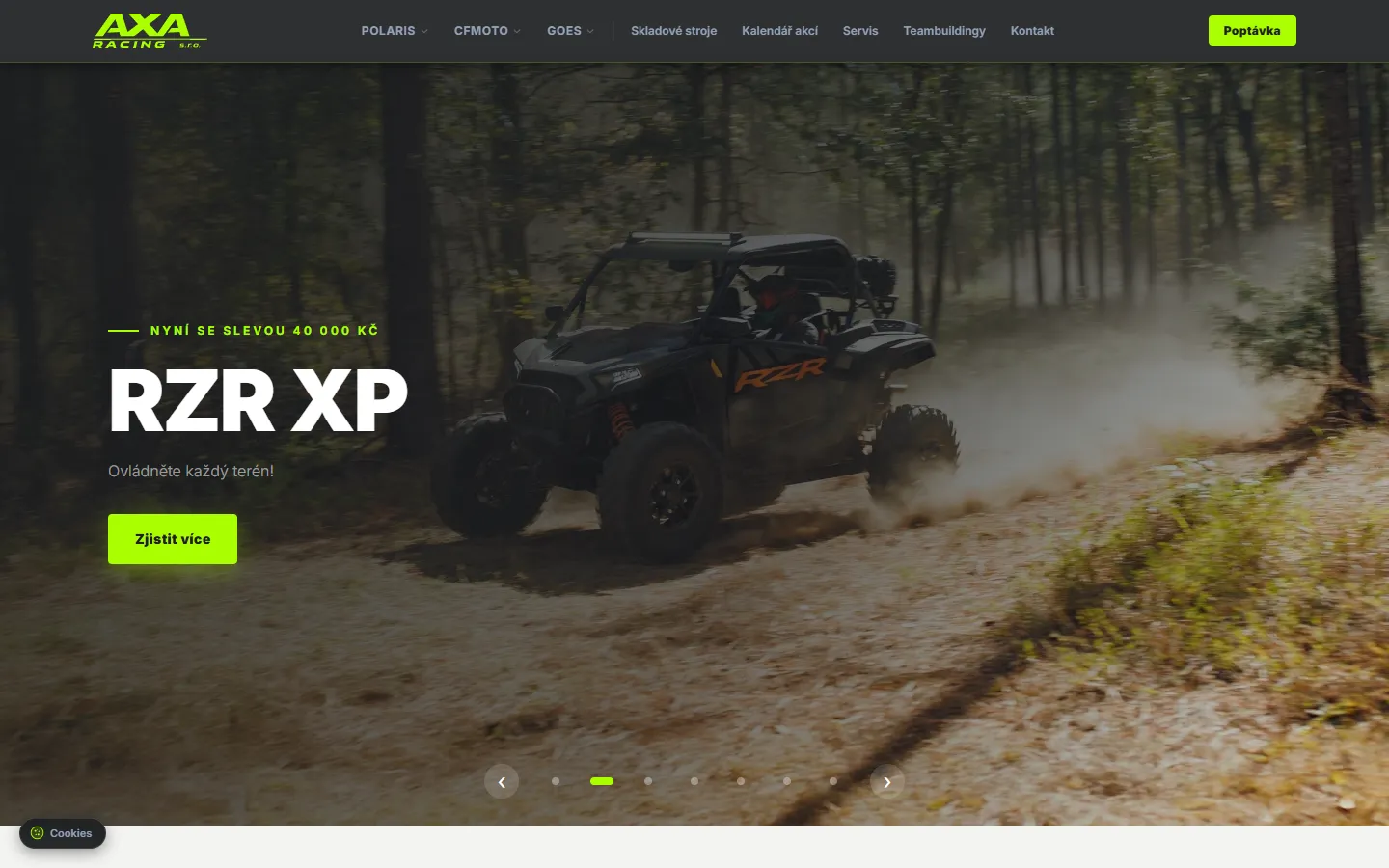
How we merged data from Polaris, CFMOTO and GOES into one dealer website with its own admin. Built on Next.js, first version live in three days.